Blog

  • Libby App: Your Public Library on Your Phone, Computer, or Tablet

    Libby App: Your Public Library on Your Phone, Computer, or Tablet

    A Quick Sharing of Knowledge

    I have been using an electronic library app for quite a long time and recently realized that not everyone knows about it. It is Friday, and I want to share this in case someone here hasn’t heard of the concept or its implementation. Libby is a free app that lets you borrow ebooks, audiobooks, and digital magazines from participating public libraries using a library card.

    There are no subscription fees, advertisements, or late fees. Some libraries let you apply for a card online, while others may require an in-person visit.

    The size and variety of collections differ by library system. Large urban and regional library systems often provide extensive selections of ebooks, audiobooks, magazines, and digital learning materials.

    Having access to multiple eligible library cards can expand the number of titles available to you.

    How to Get Started

    1. Get a library card from your local public library. Many libraries allow residents to apply online, while others require an in-person visit. Residency is not always required, and in some cases you may retain access to a library in a place where you lived many years ago.
    2. Install the Libby app on your phone or tablet, or visit LibbyApp.com on a computer.
    3. Find your library and enter your library card information.
    4. Search for a book, audiobook, or magazine and select Borrow.
    5. If all copies are currently in use, select Place Hold. Libby will notify you when the item becomes available.

    You can download many books and audiobooks for offline use, which is convenient when traveling or when you do not have an internet connection. When the lending period ends, borrowed items are returned automatically, so you do not have to worry about late fees. In the United States, many libraries also allow you to send borrowed ebooks to a Kindle. See the Libby Help Center for details.

    Why Use an Electronic Library?

    The most obvious benefit is cost. Someone who reads or listens to only one or two books per month can save a significant amount of money each year by borrowing instead of buying.

    It also removes practical barriers. You can borrow a book at any time, listen while walking or commuting, adjust the text size, and explore unfamiliar authors without spending money. Audiobooks can be especially useful for people who have limited time to sit and read.

    The available selection depends on your library system, and popular titles may have waiting lists. However, you can place holds, create a wish list, and browse similar titles while you wait.

    You can also add cards from multiple library systems, which can expand the available collection.

    References

    Examples of prominent library systems that offer Libby collections include:

    Vancouver Public Library — Vancouver

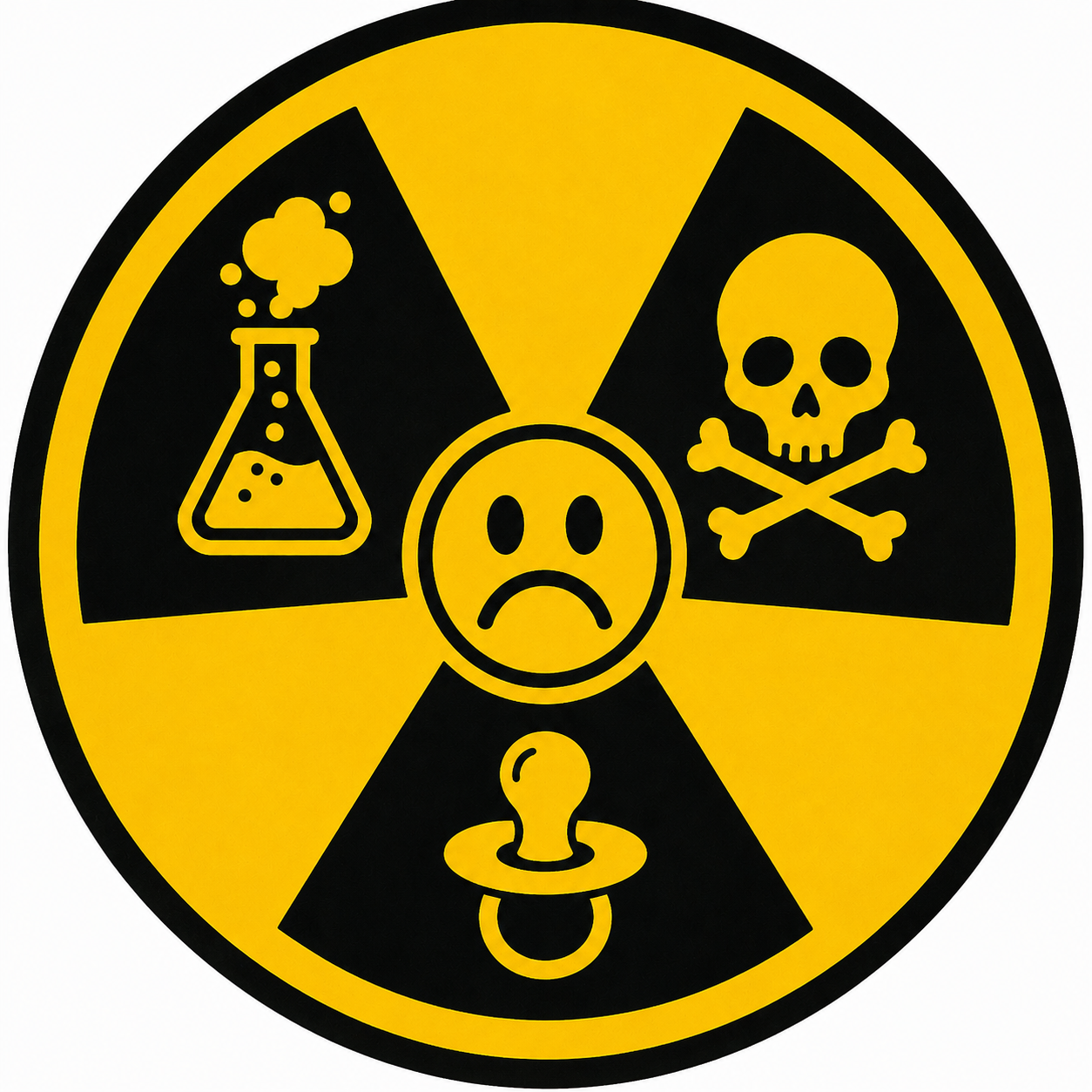
  • California Proposition 65 warnings have become a nuisance.

    California Proposition 65 warnings have become a nuisance.

    https://oag.ca.gov/environment/prop65

    You probably have seen it everywhere if you live or travel in California.

    “This product can expose you to chemicals known to the State of California to cause cancer, birth defects, or other reproductive harm.”

    The original idea seems perfectly reasonable: warn people about dangerous exposures.

    But there is a problem. For a manufacturer, determining that the warning is not necessary may require exposure analysis and accepting some legal risk. Putting the warning on the product is much easier.

    So the rational manufacturer may warn first and ask questions never.

    Eventually the warning appears everywhere. Consumers stop asking what chemical is involved, how much of it is present, what the actual exposure is, or whether the risk is meaningful. The warning becomes visual noise.

    This creates an interesting member of a much larger family of problems: a regulation created with good intentions changes the incentives of the people implementing it, and their rational response can partially destroy the value the regulation was supposed to create.

    The paradox is beautiful: requiring more information can leave the consumer with less useful information.

    There is also an important counterargument worth mentioning.

    Prop 65 has sometimes caused manufacturers to actually reduce hazardous chemicals rather than merely label them. The California Attorney General gives examples involving lead in artificial turf and lead-containing coatings on beverage bottles.

    What should we do?

    Perhaps the reasonable next step is much simpler: relax.

    Keep strong warnings where the expected exposure and risk are substantial enough that an ordinary person might reasonably change behavior because of them. If something I regularly eat, breathe, or handle creates a meaningful risk, tell me clearly.

    But for the enormous tail of products where the risk is extremely small, indirect, or requires unrealistic levels of exposure, perhaps the correct warning is no warning at all.

    This would have to come together with legal protection. We cannot tell manufacturers, “Don’t put ridiculous warnings everywhere,” while simultaneously leaving them exposed to lawsuits for failing to warn about extremely small risks. The regulatory threshold and liability threshold have to move together.

    At some point we should be allowed to say: yes, there is some risk. It is small enough. Live with it.

  • Purpose and Approach

    Purpose and Approach

    This project is intended for professional observations, policy discussions, engineering opinions, and other topics connected to science and technology.

    Notes published here are often cross-referenced on social platforms, especially when they are tied to a particular place, period, regulation, technology, or current event. They represent working analyses and opinions rather than declarations of final truth. The purpose is to stimulate professional discussion and improve understanding through feedback.

    When approaching a problem, I try to start from basic principles, question hidden assumptions, and separate observations from interpretations. I deliberately look for overloaded definitions, objectives confused with mechanisms, and situations where people appear to disagree while actually optimizing for different goals. Sometimes an argument largely disappears once those goals are made explicit.

    Deadlocks often occur when different parties are asked to accept an established consensus, especially when each side accepts a different one. In such situations, I prefer to return to simple questions, establish the relevant observations, and rebuild the reasoning from the ground up. This may initially annoy everyone involved, but when the discussion is already deadlocked, going back to basics can be a useful way to find where the disagreement actually begins.

    Numbers matter. An effect can be real without being important. Sometimes no new evidence is needed; the existing numbers simply need to be put on the proper scale. A measurable effect should be compared with the size of the system, competing effects, uncertainty, and the practical consequences before it is treated as significant.

    The goal is not to be provocative for its own sake or to defend or dismiss a particular ideology. The goal is to understand how technological and physical systems actually behave, where conventional approaches work, where they fail, and which assumptions determine the conclusions.

    I expect my opinions to change when new information becomes available, as they should for any experimental scientist. When that happens, older notes may be marked as outdated rather than simply removed. A wrong conclusion can still be useful: someone else may make the same reasonable mistake, and seeing what additional evidence changed the conclusion can be more informative than seeing only the final answer.

    Many of these notes are therefore conceptually unfinished. They document an ongoing investigation rather than a completed theory. I expect them to evolve, and occasionally to be proven wrong, as new evidence, experience, and better arguments become available.

    In short

    • Start from basic principles, not authority or consensus.
    • Separate observations from interpretations and expose hidden assumptions.
    • Define the problem before debating the answer — disagreements often come from different definitions or objectives.
    • When discussion is deadlocked, go back to basics and rebuild the reasoning from shared observations.
    • Numbers matter — a real effect is not necessarily an important effect; scale and practical significance matter.
    • Treat opinions as hypotheses — new evidence, better analysis, or better arguments should change conclusions.
    • Expect conclusions to evolve — these notes document an ongoing investigation, not final truth.